

Iron first: why does it come first, and which foods have it?
1. What Is It?
At about six months, the iron your baby was born with starts to run low, just as their needs go up. Milk is still important, but from here on, food has to bring in more of the iron. That is why Canadian guidance puts iron-rich foods first.
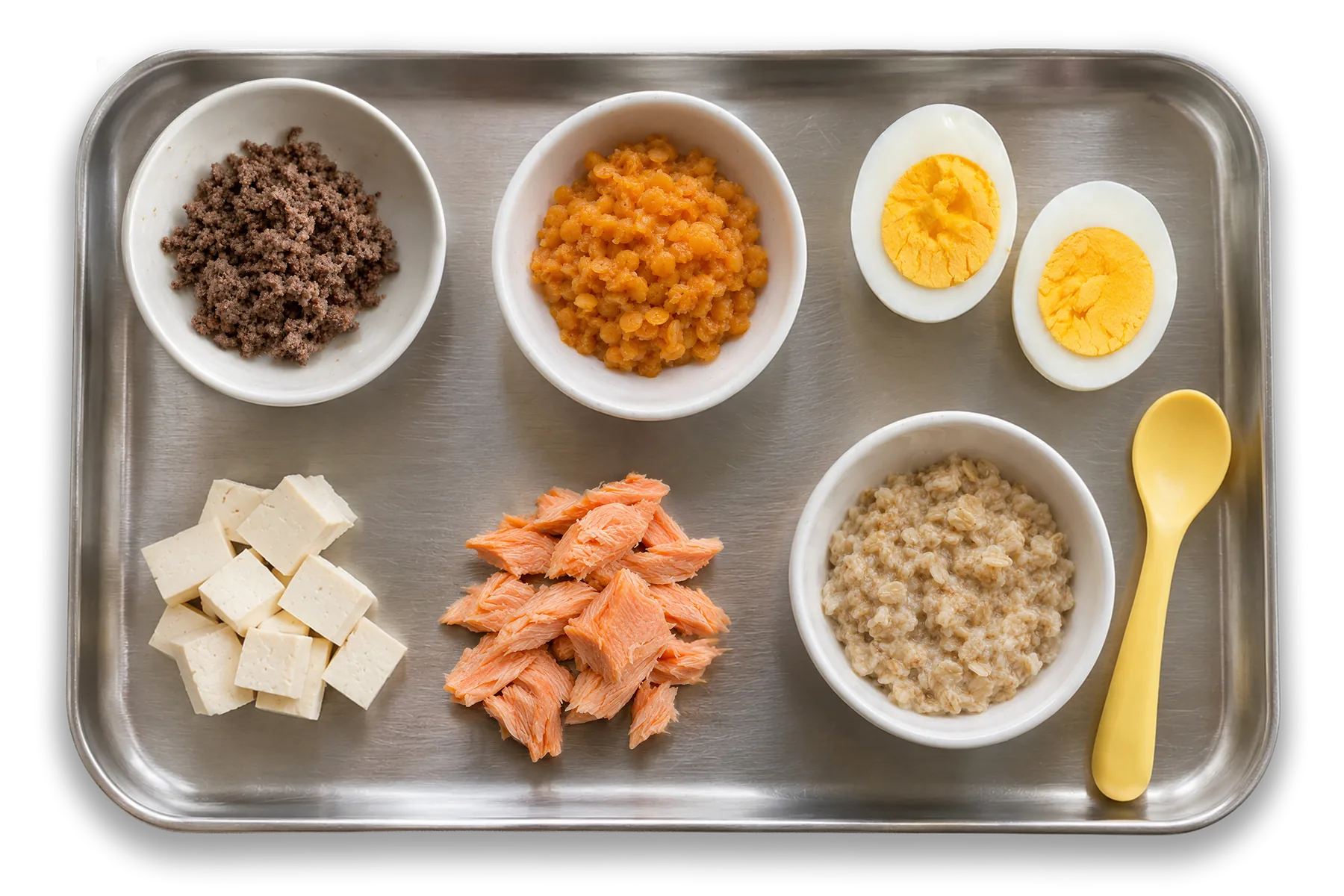
Iron in food comes in two forms:
- Heme iron (absorbed best): beef, chicken, turkey, fish
- Non-heme iron: iron-fortified infant cereal, lentils, beans, eggs, tofu
Your baby does not need big portions of meat. Even a small amount helps, and it also helps the body absorb iron from the other foods on the plate.
2. Why It Matters During Starting Solids
- Needs rise fast. Babies grow quickly between six and 12 months, and that is exactly when the risk of low iron goes up.
- Timing matters. Waiting well past six months to start other foods makes low iron more likely.
- It builds quietly. Low iron develops gradually, so it is easier to prevent with everyday meals than to spot early.
- Milk has a limit. Milk stays important, but later on, too much cow’s milk can crowd out iron-rich food.
3. What Does the Science Say?
Health Canada notes that at about six months an infant’s iron stores are depleted, and that the risk of iron deficiency increases from six to 12 months. It recommends iron-rich meat, meat alternatives and iron-fortified cereal as the first foods, offered two or more times a day between six and 12 months.
Not all iron is absorbed equally. Heme iron in meat, poultry and fish is absorbed much better than non-heme iron in cereals, legumes, eggs and tofu. Eating meat together with plant foods boosts how much non-heme iron the body takes in, and vitamin C-rich fruits and vegetables help too.
The Canadian Paediatric Society lists meat, poultry, cooked whole egg, fish, tofu and well-cooked legumes as good sources of iron, along with iron-fortified infant cereals. It also notes that waiting after six months to introduce other foods increases the risk of iron deficiency.
Cow’s milk is not recommended as a drink before nine to 12 months. After 12 months, CPS advises no more than 750 mL of milk a day, because too much milk can lead to iron deficiency anemia.
4. What Parents Can Do Today
-
1
Put an iron food on the plate twice a day
Pick one for breakfast and one for lunch or dinner: iron-fortified infant cereal, minced beef or chicken, flaked boneless fish, mashed lentils, well-cooked egg or soft tofu. A spoonful or two is plenty to start.
-
2
Pair it up
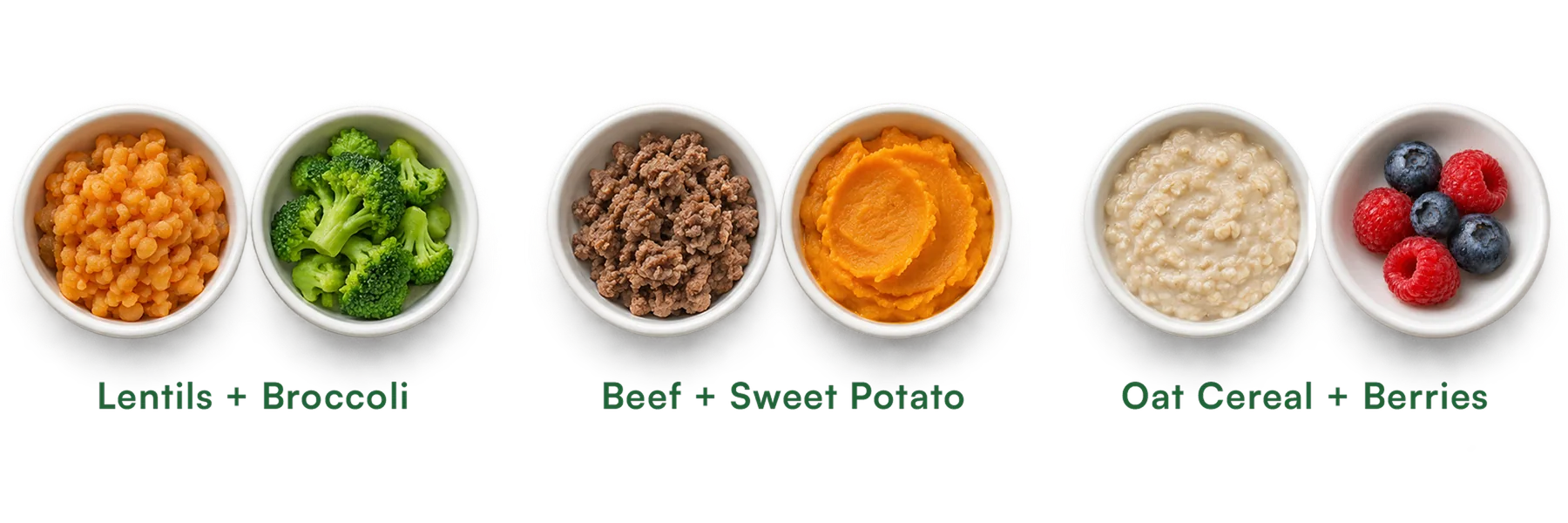
Serve plant-based iron with a little meat, or with a vitamin C-rich fruit or vegetable such as soft-cooked broccoli or mashed berries. Lentils and broccoli on the same plate work harder together.
-
3
Keep milk in its lane
Breast milk or formula stays the main drink for now. Cow’s milk as a drink waits until nine to 12 months, and after 12 months it stays under 750 mL a day. If your baby was born early or you have questions about iron, ask your health care provider.
Save this for your next grocery run. One iron food at breakfast, one at dinner, done. The iron block is the first section on our five-section stainless steel baby plate, open for preorder. Want the full picture of a balanced plate? Read The 5-Block Method.
General feeding education, adapted from Health Canada and Canadian Paediatric Society guidance. It does not replace advice from your child’s healthcare provider.
Sources
Every claim above links to a specific, named source, not a general reference.
- Health Canada, Canadian Paediatric Society, Dietitians of Canada & Breastfeeding Committee for Canada. Nutrition for Healthy Term Infants: Recommendations from Six to 24 Months. Page modified 30 October 2025
- Canadian Paediatric Society, Caring for Kids. Feeding your baby in the first year. Updated January 2020
Related reading
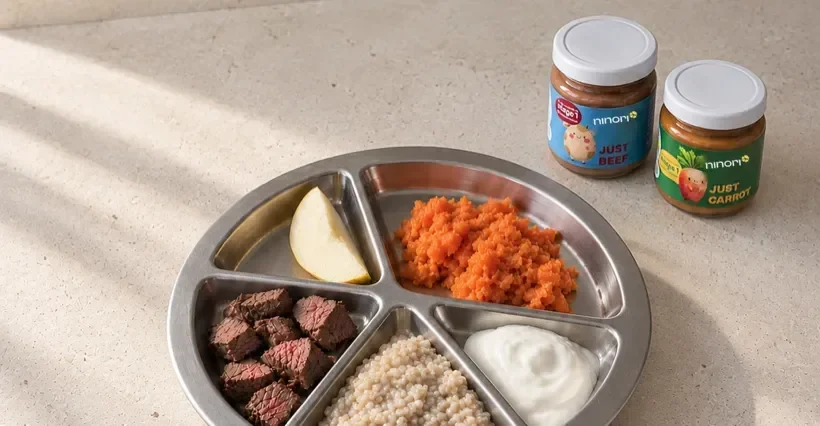 The 5-Block Method
What goes on my baby’s plate every day?
Protein, Vegetable, Complex Carbs, Unsaturated Fats, Fruits: what each block does and why the proportions matter.
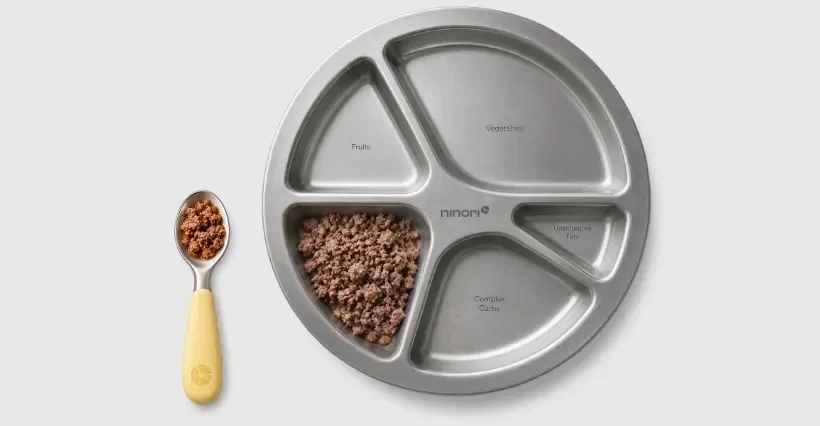 The 5-Block Method
First weeks: how do I get from the first spoonful to a full plate?
Start with one iron-rich food, add one new food at a time, and fill the plate over the first month.